
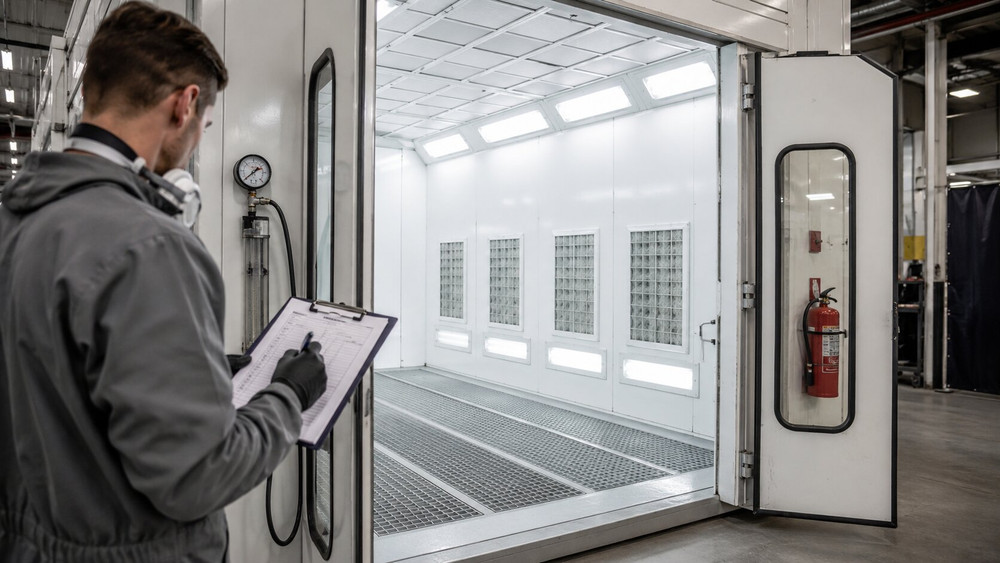
Paint Booth Maintenance: A Practical Guide to Keeping Your Booth Running
Posted by JMC Team on 23rd Jul 2026
A paint booth doesn't ask for much. Clean filters, clear airflow, a fire suppression system that actually works when it's supposed to. But skip that upkeep for a few months, and the cracks start showing fast: dust in the finish, a fan straining to push air through clogged media, an inspection that suddenly turns into a problem you didn't see coming.
The majority of paint booth issues trace back to the same root cause. Not bad equipment, just deferred maintenance.
Daily Maintenance Tasks
Clean Overspray Before It Builds Up
Overspray doesn't stay where it lands. It drifts onto walls, settles on the floor, and works its way into corners that are easy to forget about. A quick blow-down or wipe-down after each job, walls, floor, and light fixtures, keeps that buildup from becoming a contamination source on the next paint job. A five-minute routine after every vehicle is far less work than letting buildup turn into a deep clean later.
Check Filters by Eye, Not Just by Calendar
Intake and exhaust filters don't wear out on the same schedule. Intake filters protect the finish from outside dust and debris, while exhaust filters trap overspray before it reaches the fan and the outside air. A quick visual check, looking for discoloration, sagging, or visible buildup, tells you more in the moment than a fixed replacement date ever will. If a filter looks heavily loaded or torn, change it regardless of how recently it went in.
Watch the Airflow Gauge
If your booth has a manometer or pressure gauge, glance at it before the first job of the day. A reading that's drifted from baseline is often the earliest sign something's starting to clog upstream or downstream. Booths without a gauge installed are flying blind on this; it's worth adding one if yours doesn't. Paint booth accessories like airflow gauges are a small cost next to what a missed clog can do to a finish.
Weekly and Monthly Maintenance
Set a Filter Replacement Rhythm
Filter life depends on spray volume, coating type, and how dusty the shop environment is, so there's no single number that fits every booth. What works in practice is combining a baseline schedule (checking intake filters weekly, exhaust filters more often, given how much faster they load with overspray) with the visual and gauge-based checks from the daily routine. If pressure drop readings are climbing faster than expected, that's the signal to shorten the interval, not the calendar.
Inspect Lighting
Booth lighting takes a beating from heat, vapor, and overspray. Dim or flickering fixtures aren't just an inconvenience; they make it harder to catch missed spots, uneven coverage, or contamination in the finish before it's too late to fix. Check monthly that all fixtures are working at full brightness, and that lens covers are clean and free of overspray buildup.
Check Fan Belts and Door Mechanisms
A loose or cracking fan belt shows up as reduced airflow long before it actually snaps, so a monthly visual check, looking for fraying, glazing, or slack, catches the problem while it's still a five-minute fix. While you're at it, lubricate door hinges and check that doors close and seal properly. A door that doesn't seal lets unfiltered air slip past the entire filtration system, undermining everything else on this list.
Fire Suppression System Checks
This is the system you hope never has to activate, which makes it easy to neglect. A monthly visual check, looking at nozzles, sensors, and discharge lines for obstructions or damage, catches the obvious problems. Fire extinguishers specifically should be inspected monthly and given a full service annually.
The full suppression system itself generally needs a professional inspection every six months, since these systems involve components, agent levels, and discharge mechanisms that aren't practical to verify without the right tools. Keep records of every inspection. If your suppression system is ever questioned during an insurance review or a fire marshal visit, a documented history is worth far more than a verbal assurance that everything's fine.
Electrical System Checks
Spray booths are classified as hazardous locations for good reason, and the wiring, fixtures, and switches in and around the booth need to stay in good condition to keep that classification meaningful. Monthly, check for any signs of wear on cords, loose connections, or damaged conduit.
It's also worth periodically verifying grounding continuity from the booth to its ground rod, since a grounding fault is exactly the kind of issue that goes unnoticed until it matters most. Anything that looks compromised should be addressed by a qualified electrician rather than patched temporarily, given what's at stake in a space built around flammable vapor.
Seasonal and Annual Maintenance
Deep Cleaning
Beyond the daily wipe-down, a seasonal deep clean reaches the spots that don't get touched in routine upkeep: behind panels, inside ductwork access points, and around the fan housing. Overspray and dust accumulate in these areas slowly enough that they're easy to overlook, but they're exactly the kind of buildup that turns into an airflow or fire risk over time.
Full Equipment Inspection
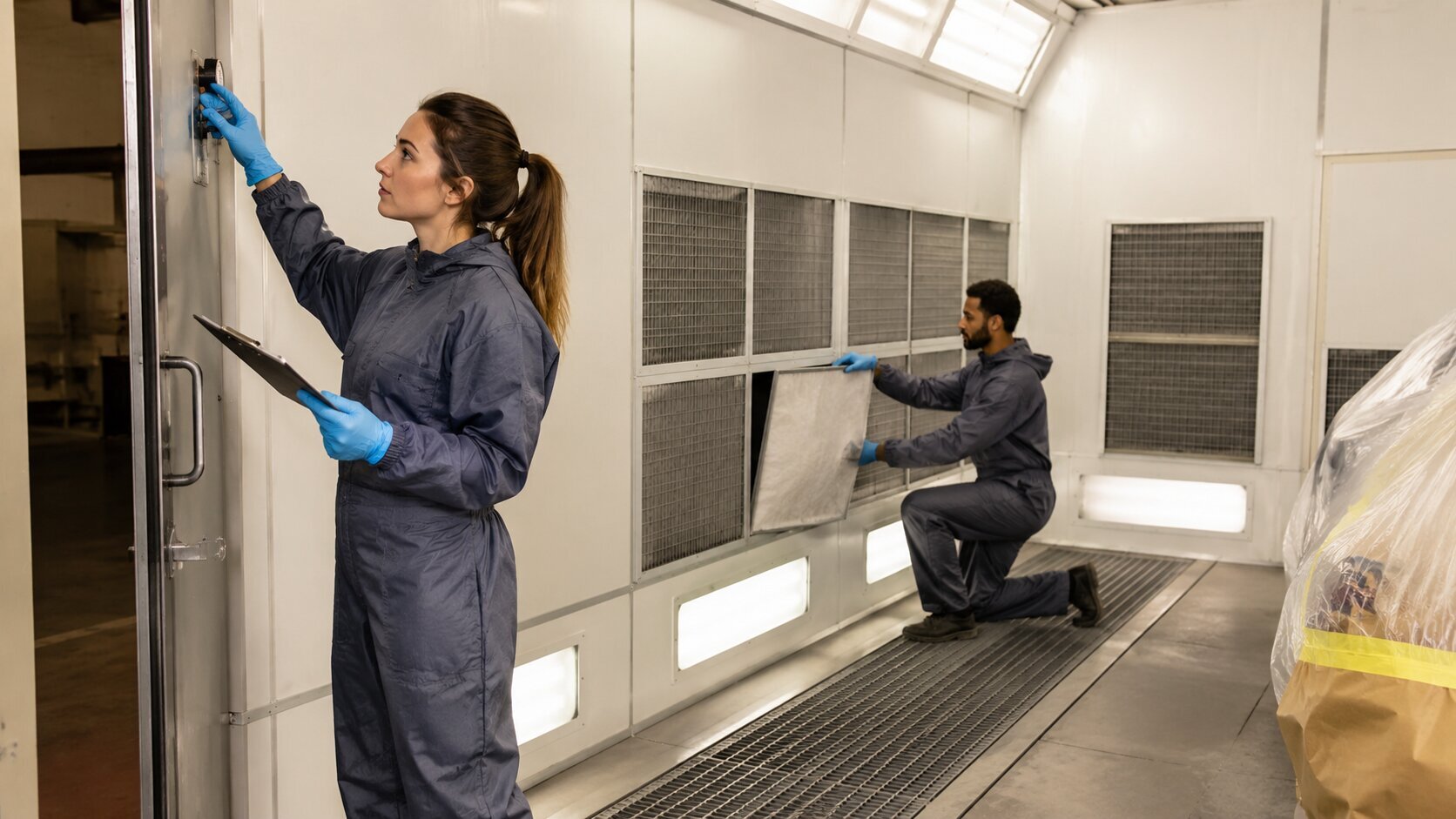
Once or twice a year, walk the entire booth as if you were seeing it for the first time. Check fan bearings and motor performance, since a straining motor often shows up as reduced airflow long before it fails outright.
Inspect door seals and gaskets, as a worn seal allows unfiltered air to bypass the filtration system entirely. Lubricate door hinges and blower shaft bearings while you're in there, since dry bearings wear faster and louder than lubricated ones. Look over ductwork for leaks, dents, or paint sludge buildup that restricts airflow even when the filters themselves are fine.
One detail worth getting right at every cleaning, not just the annual deep clean: use cleaning products and tools actually designed for spray booth surfaces. Harsh chemicals or improvised tools like cotton mops can damage booth panels or leave residue that affects future finishes, turning a routine clean into a problem of its own.
Compliance Review
An annual check-in against current OSHA, NFPA, and EPA requirements is worth doing even if nothing in the booth has changed, since the regulations themselves can shift. For the full breakdown of what those requirements actually cover, see our guide to paint booth requirements and regulations.
What Neglected Maintenance Leads To
Most paint booth problems aren't mysterious once you trace them back. They're nearly always downstream of one of the maintenance tasks above, slipping through the cracks.
Poor airflow is the most common complaint, and clogged filters are the most common cause. As filters load with overspray and debris, the fan has to work harder to pull the same volume of air through, which throws off the booth's pressure balance and lets contaminants in through doors and seams.
Worn fan bearings, leaking ductwork, and damaged door seals all show up the same way: weaker airflow than the booth was designed to deliver, so if a filter change doesn't fix it, the next place to look is the fan and the seals.
Uneven paint jobs usually point back to that same airflow problem, since inconsistent air movement means paint doesn't settle the way it's supposed to. But lighting plays a role too. A painter working under dim or uneven light misses thin spots and inconsistencies that show up clearly once the vehicle leaves the booth.
Excess dust or contamination almost always traces to either a compromised intake filter or a housekeeping gap, dust tracked in from outside the booth, residue left over from the last job, or debris from a worn seal.
The fix is rarely complicated once the source is identified, but finding the source means actually walking through filters, seals, and cleaning habits one at a time rather than guessing.
Paint Booth Maintenance Checklist
☐ Wipe down walls, floor, and fixtures after each job, using booth-approved cleaning products
☐ Visually inspect intake and exhaust filters for buildup or damage
☐ Check the airflow gauge against baseline readings
☐ Replace filters when visual or gauge readings call for it, not just by date
☐ Inspect lighting fixtures and lens covers monthly
☐ Check fan belts for fraying, glazing, or slack monthly
☐ Lubricate door hinges and verify doors close and seal properly
☐ Visually check fire suppression nozzles, sensors, and discharge lines monthly
☐ Inspect and service fire extinguishers (monthly check, annual service)
☐ Schedule a professional fire suppression system inspection every six months
☐ Check electrical cords, connections, and conduit for wear monthly
☐ Verify grounding continuity from the booth to its ground rod periodically
☐ Deep clean ductwork, panels, and fan housing seasonally
☐ Inspect fan bearings, motor performance, and door seals annually
☐ Lubricate blower shaft bearings annually
☐ Review current OSHA, NFPA, and EPA requirements annually
Keep Your Booth Running with the Right Accessories
Consistent maintenance starts with having the right supplies on hand before you need them. JMC Equipment carries paint booth accessories, including filters, gauges, and replacement parts, along with paint mixing and prep stations to keep the rest of your paint workflow organized.
Browse the full paint booth collection at JMC Equipment, or call 800-562-4791 to talk through what your shop needs.
Frequently Asked Questions
How often should filters be replaced?
It depends more on usage than on a fixed calendar. Intake filters typically last longer than exhaust filters, since exhaust media takes the direct overspray load from every spray pass. The most reliable approach combines a baseline schedule with real signals: a manometer or pressure gauge reading drifting from its calibrated baseline, visible debris or blemishes appearing in the finish, or overspray buildup remaining in the booth after spraying. When any of those show up, it's time to change filters regardless of how long it's been.
What's the cost of paint booth maintenance?
It varies widely based on booth size, usage volume, and whether tasks are handled in-house or by a service contractor, so there's no single figure that applies across shops. What's consistent is that routine maintenance costs far less than the alternative: unplanned downtime, rework from a contaminated finish, or emergency repairs to a fan or motor that failed under stress it wasn't designed to handle. Budgeting for regular filter replacement and periodic professional inspections is the more predictable path.
Can I do maintenance myself, or do I need a professional?
Most daily and weekly tasks, cleaning, filter checks, and visual inspections are well within reach for shop staff with no special training. Where it makes sense to bring in a professional is anything involving the fire suppression system's internal components, electrical work beyond a basic visual check, or diagnosing a persistent airflow problem that doesn't resolve with a filter change. Knowing where that line sits protects both the equipment and the people working around it.
What's the single most common maintenance mistake shops make?
Treating filter replacement as a fixed calendar task instead of a usage-based one. A shop spraying high volumes of metallic basecoat will load filters far faster than one doing occasional touch-up work, and a rigid monthly or quarterly schedule doesn't account for that difference. Watching the actual signals, gauge readings, visual condition, and finish quality catches problems a calendar alone will miss.
 CALL US NOW
