
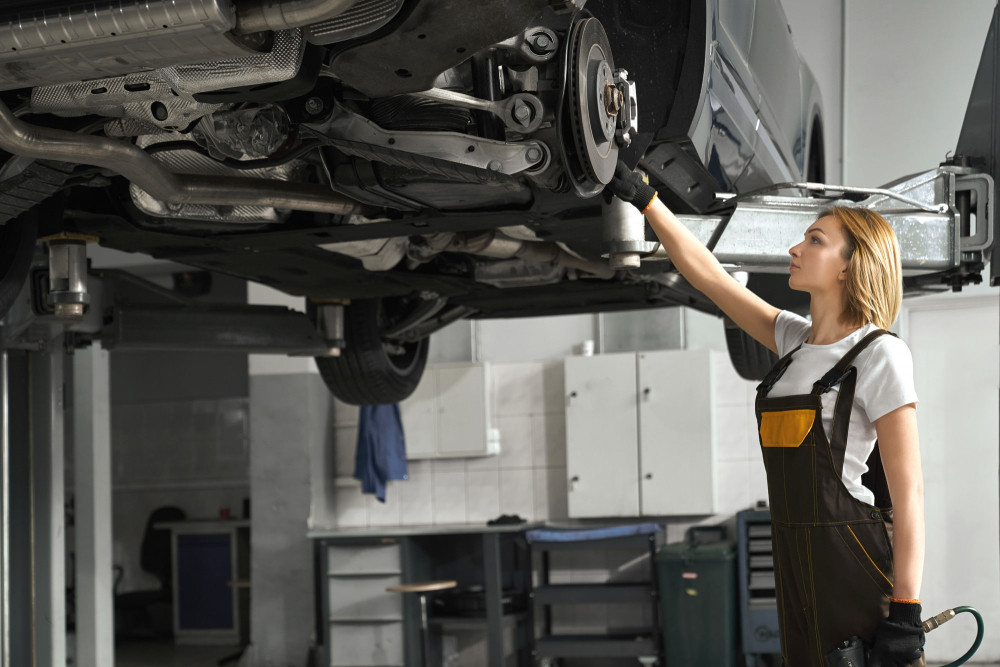
Best Hydraulic Car Lifts for Your Garage in 2026: Complete Buying Guide
Posted by JMC Team on 23rd Jul 2024
If you've ever spent an afternoon flat on your back under a car, fighting with jack stands and praying nothing slips, you already know why hydraulic lifts took over the automotive world. They didn't just make life easier. They became the industry standard because nothing else combines raw lifting force with the kind of control a mechanic actually needs.
This guide sticks to hydraulic car lifts specifically. Not electric winches, not pneumatic-only systems. Hydraulic. We'll walk through why these lifts dominate shops and home garages alike, break down every major type, look at real models you can buy right now, and help you figure out which one fits your space, your budget, and your vehicles.
Why Hydraulic Car Lifts Are the Industry Standard
Hydraulic systems work on a simple principle. A pump pressurizes fluid, that fluid pushes against a piston, and the piston does the heavy lifting. Literally. The beauty of hydraulics is the force multiplication. A small amount of pressure applied over a cylinder can generate thousands of pounds of lifting power. That's why a compact two-post lift can hoist a 9,000 lb truck without breaking a sweat.
Mechanical screw-jack systems exist too, but they're slower, noisier, and need more maintenance over time. Pure electric lifts are rare in this weight class because electric motors alone don't handle the load smoothly. Hydraulics give you power, control, and consistency in one package. That combination is why every major lift manufacturer, from BendPak to Challenger to AMGO, builds its core product line around hydraulic technology.
Power and Reliability
A hydraulic lift doesn't strain or hesitate under load. The fluid does the work, and as long as the seals and lines are in good shape, that lifting force stays consistent for years. Manufacturers generally build commercial-grade hydraulic lifts to handle heavy daily use over many years of service. Home garage owners running a hydraulic two-post or scissor lift a few times a week can often expect a decade or more of reliable use, especially with basic fluid checks and seal inspections along the way.
Smooth Lifting Action
Anyone who's used a cheap mechanical jack knows the jerky, uneven feeling as the vehicle rises. Hydraulic lifts don't do that. The fluid pressure stays even throughout the stroke, so the vehicle rises smoothly from floor level to full height. That matters more than people think. A smooth lift means less stress on suspension components while the car is being raised, and it means the mechanic underneath isn't dealing with sudden jolts or shifts.
Long-Term Durability
Hydraulic lift cylinders are built from heavy steel, often chrome-plated to resist corrosion and wear. With proper maintenance, that's a piece of equipment that outlasts most of the cars it lifts. Compare that to lower-cost lifting solutions that wear out arms, cables, or motors within a couple of years, and the durability case for hydraulics gets even stronger.
Types of Hydraulic Car Lifts
Not every hydraulic lift looks or works the same way. The type you need depends heavily on your space, your budget, and what you're actually doing to the vehicle once it's in the air.
Hydraulic 2-Post Lifts
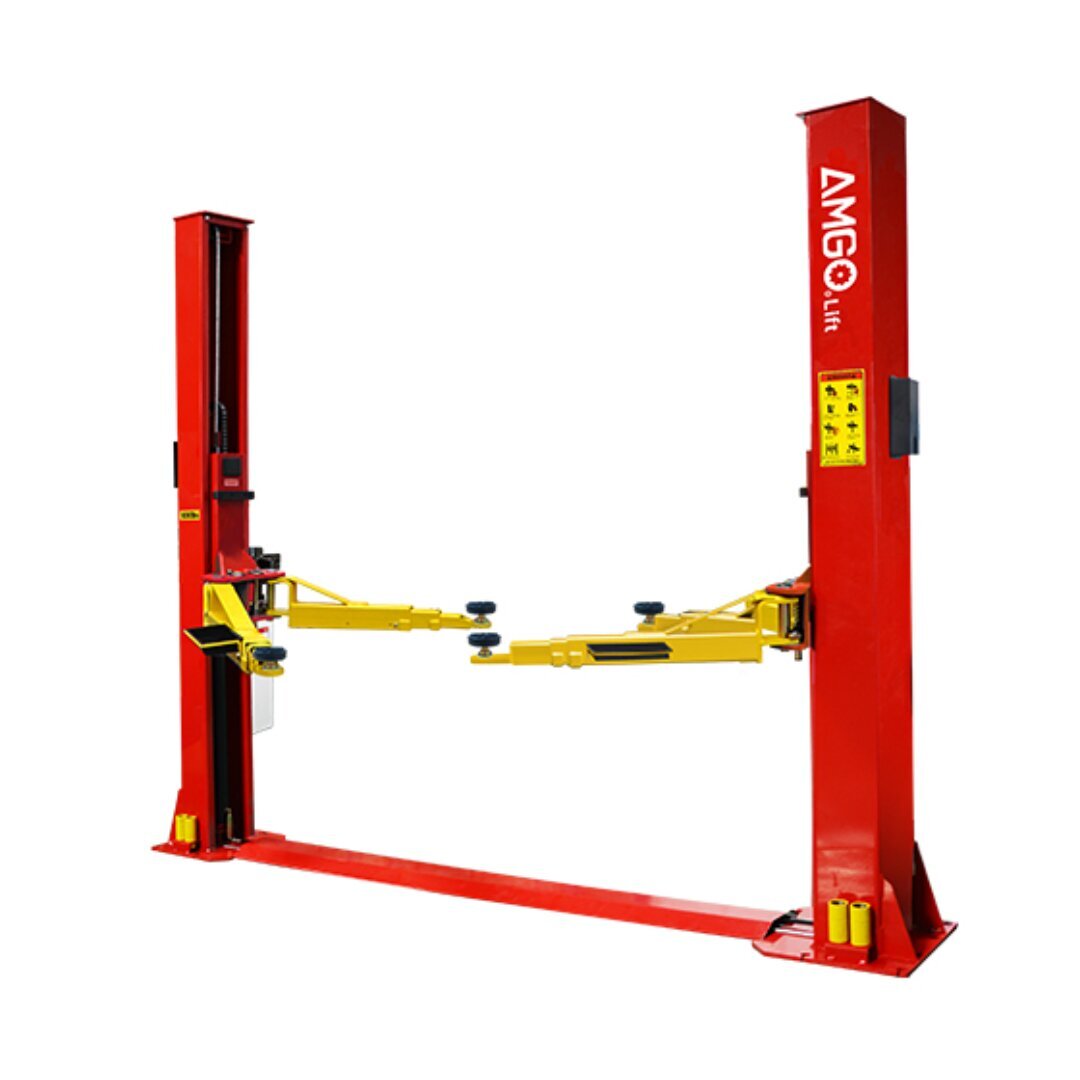
The two-post lift is the workhorse of professional shops, and for good reason. Two columns, swinging arms, a small footprint. You drive the car between the posts, position the arms under the frame contact points, and up it goes. Because the columns sit to the sides rather than under the car, you get full access to the undercarriage, the wheels, and the doors without anything in your way.
JMC's 2-post lift lineup ranges from 7,000 lb up to 20,000 lb capacity, with symmetric, asymmetric, and Versymmetric arm configurations depending on how you want to balance door access against floor space. Symmetric lifts center the vehicle between the posts. Asymmetric lifts shift the car forward, which opens up door clearance, especially useful in tighter bays.
Best for: shops doing brake jobs, suspension work, tire rotations, and general repair where speed and undercarriage access matter most.
Hydraulic 4-Post Lifts
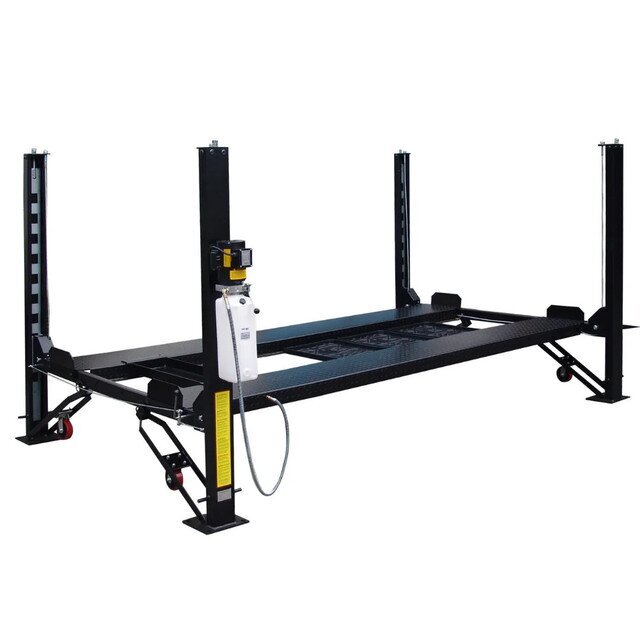
Four-post lifts trade some of that wide-open undercarriage access for stability and storage capability. The vehicle drives up onto two long runways supported by four columns, which means the car is sitting on its own wheels rather than hanging from frame contact points. That makes four-post lifts a natural choice for alignment work, long-term vehicle storage, or anyone who just wants to park two cars in the vertical space one normally takes.
JMC stocks 4-post lifts from 8,000 lb home-garage models all the way up to 40,000 lb heavy-duty units built for commercial fleets. If your garage doubles as storage space for a second vehicle, or you're setting up a dedicated alignment bay, this is the category to look at first.
Best for: vehicle storage, alignment service, and anyone who wants a lift that doesn't require frame-contact precision every time.
Hydraulic Scissor Lifts
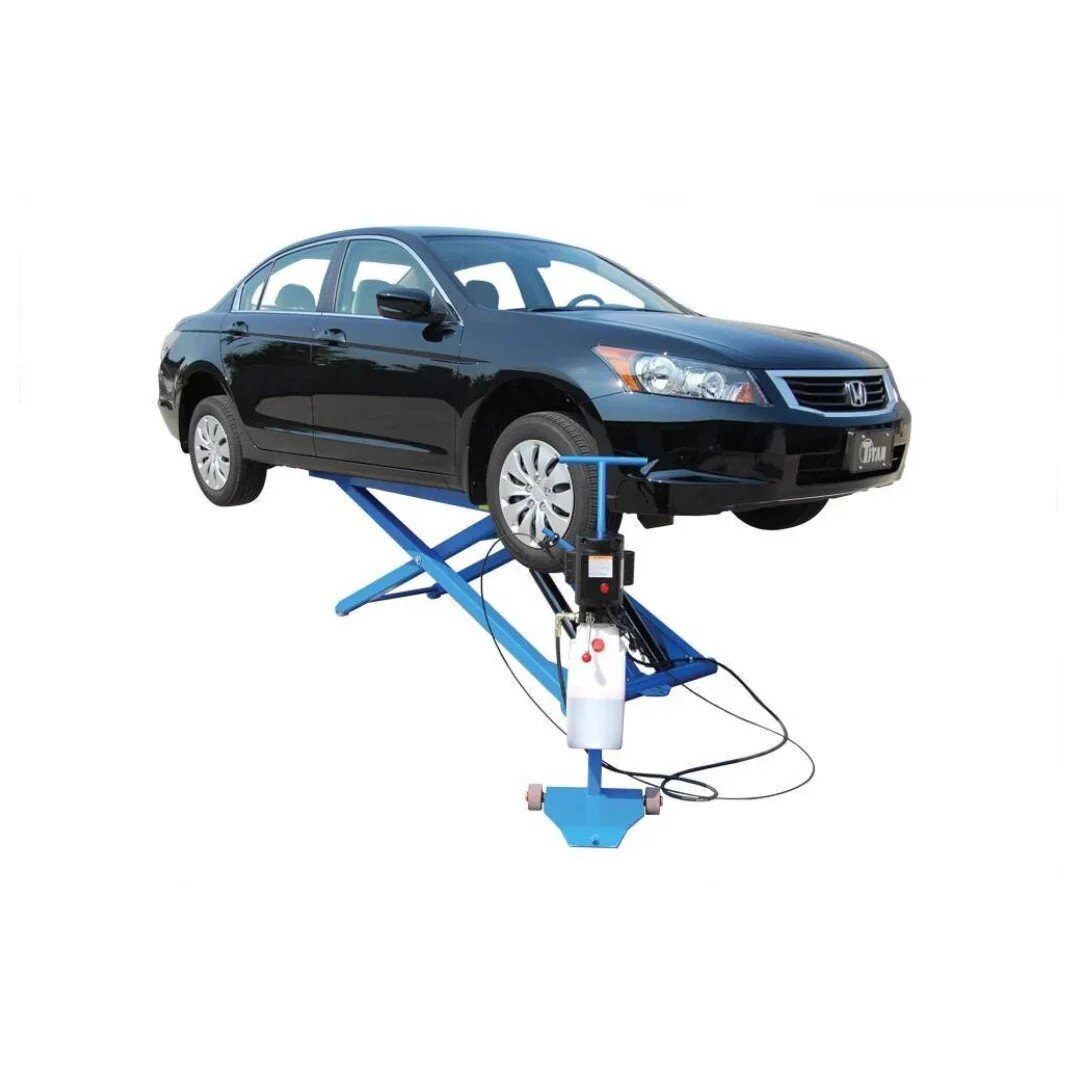
Scissor lifts use a crisscrossing hydraulic arm structure. Low-rise and mid-rise versions are typically portable or semi-portable, folding down to a low profile when not in use, which makes them one of the most space-efficient options on this list. Full-rise scissor lifts trade that portability for greater lifting height and are often mounted permanently on or in the floor.
JMC's scissor lift selection includes both low-rise and mid-rise models in the 6,000 to 12,000 lb range, with options built for portability if you need to move the lift between bays.
Best for: garages with limited floor space, mobile detailing operations, and shops that need a secondary lift for quick-service work.
Hydraulic Inground Lifts
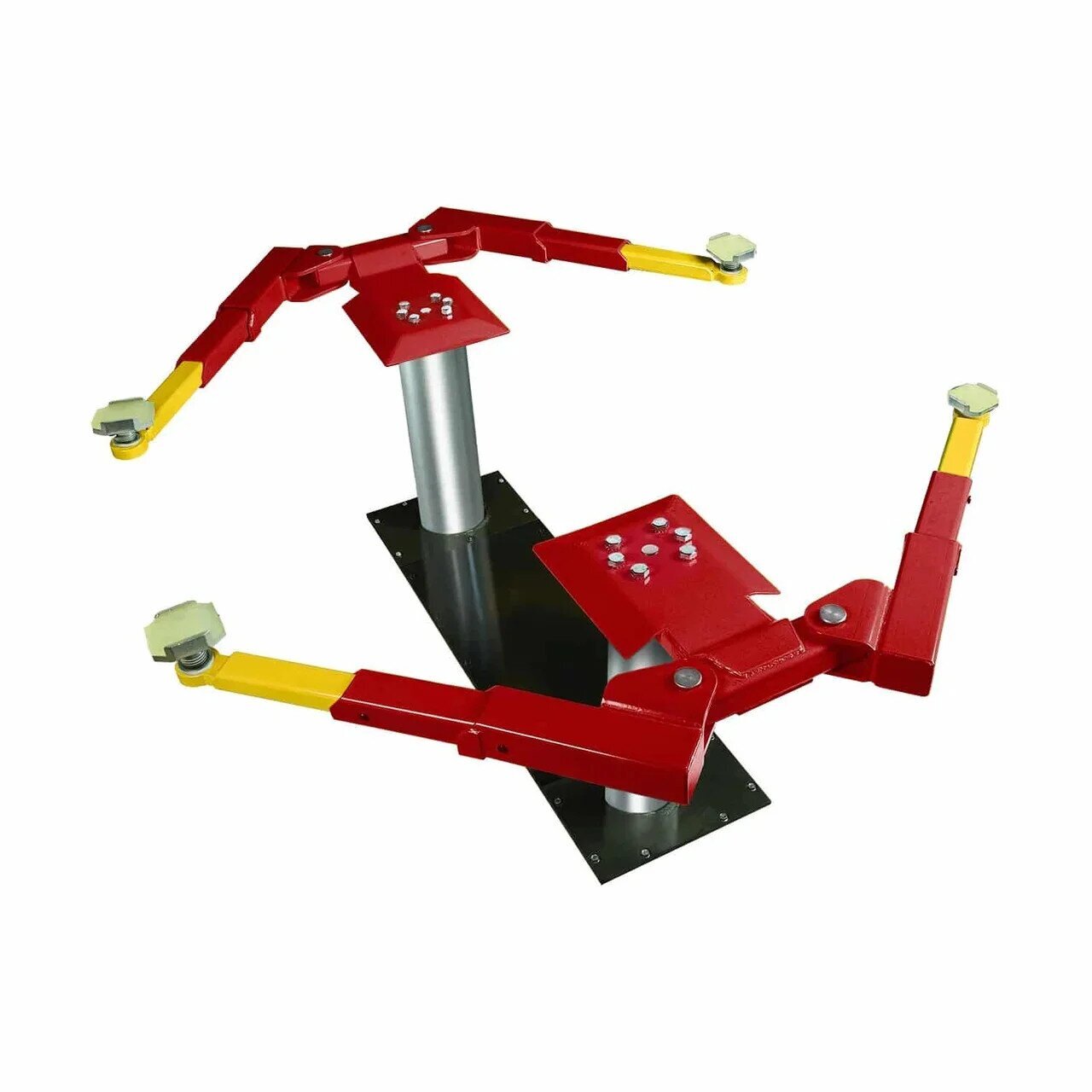
Inground lifts hide almost the entire mechanism below the floor, leaving a clean, open surface when the lift is down. That's a huge advantage for shops that care about appearance, foot traffic, or simply not having posts and columns in the way of other work happening in the bay.
JMC's inground lineup is built around Challenger's electric-hydraulic cassette-style lifts, with 10,000 and 12,000 lb capacity models. These are a bigger investment up front, since installation involves excavation and a concrete pit, but the payoff is a shop floor that looks and functions like a showroom even when the lift is in use.
Best for: high-end service centers, dealerships, and any shop where floor space and presentation matter as much as lifting capacity.
Portable Hydraulic Lifts
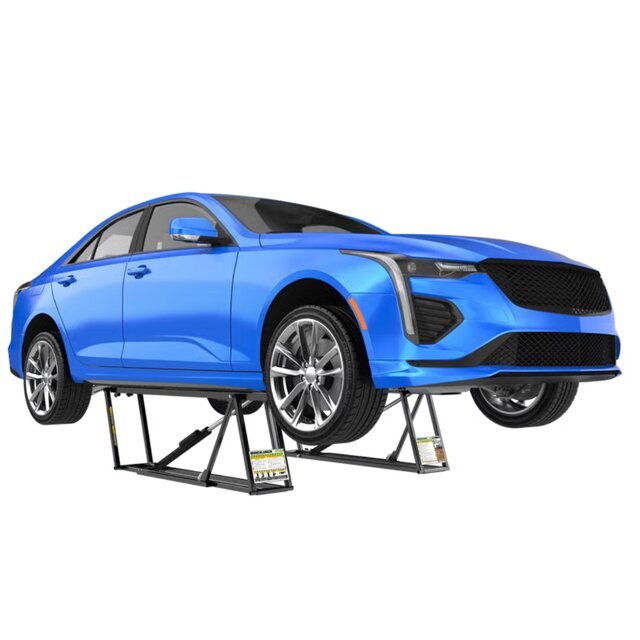
Portable lifts solve a problem the other categories can't: what do you do if you don't have a permanent home for a lift, or you're renting your garage space? QuickJack-style portable lifts use a pair of low-profile hydraulic frames connected to a separate power unit, so the lift itself can be wheeled out, used, then stored against a wall.
JMC carries the full QuickJack range, including the 6000TL, 6000TLX, 8000TL, and 8000TLX models. These use compressed air to drive the hydraulic cylinders, giving you most of the lifting power of a permanent installation without the bolts, the wiring, or the commitment.
Best for: renters, hobbyists with limited garage space, and anyone who needs serious lift capacity without a permanent installation.
Best Hydraulic Car Lifts in 2026
Here's a snapshot of some of the best hydraulic lifts available right now across each category, covering a range of budgets and use cases.
Prices reflect current promotional pricing at JMC Equipment and are subject to change. Shipping is quoted separately by model and delivery location.
If you're working with a tighter budget, the QuickJack 6000TL and the JMC JMC9KAC-TUX sit at the affordable end without sacrificing the safety features that matter. If you need serious heavy-duty capacity, the BendPak HD-9 and Challenger EV1020 are built for shops running daily, high-volume service work.
How to Choose the Best Hydraulic Lift for Your Garage
Picking the right lift comes down to three practical questions: how much space do you actually have, what are you lifting, and what's your budget ceiling.
Garage Size and Ceiling Height
Two-post and four-post lifts both need real vertical clearance. Exact requirements vary by model and lifting height, so check the specs on the lift you're considering, but plan on needing more headroom than you might expect, especially with taller four-post units. Floor space matters just as much.
Measure your garage before you fall in love with a specific lift. A scissor lift or portable QuickJack setup becomes the obvious answer if your ceiling height or floor space is tight, since neither requires the same vertical commitment as a post lift.
Vehicle Type and Weight
Check the gross vehicle weight rating on anything you plan to lift, then buy a lift rated comfortably above that number. A lift rated right at your vehicle's weight limit isn't a smart long-term plan, especially if you ever upgrade to a heavier truck or SUV.
Most home garage lifts in the 6,000 to 9,000 lb range handle passenger cars and light trucks without issue. Anything heavier, like a full-size pickup or commercial van, pushes you toward the 10,000 lb-plus category.
Budget and Safety Requirements
Price ranges across hydraulic lifts are wide, from under $2,000 for a portable QuickJack to well over $10,000 for a professional-grade inground system. Whatever you land on, don't skip the safety features. Dual-locking mechanisms, automatic arm restraints, and ALI certification (Automotive Lift Institute) aren't optional extras. They're the difference between a lift that protects you and one that doesn't.
Get the Right Hydraulic Lift From JMC Equipment
Whether you're outfitting a home garage or running a full-service shop, the right hydraulic lift comes down to matching your space, your vehicles, and your budget to the equipment that actually delivers. JMC Equipment carries hydraulic 2-post, 4-post, scissor, inground, and portable lifts from trusted brands like BendPak, Challenger, AMGO,Tuxedo and QuickJack, all backed by free shipping on qualifying orders and nationwide installation support.
Browse the full hydraulic car lift collection at JMC Equipment, or call 800-562-4791 to talk through which lift fits your garage.
Frequently Asked Questions
What's the safest hydraulic car lift?
Safety comes down to certification and design, not just lift type. Look for ALI-certified models with dual safety locks and automatic arm restraints. Two-post and four-post lifts from established brands like BendPak and Challenger consistently meet these standards, and JMC's in-house lifts are built to the same benchmarks.
How much does a hydraulic lift cost?
Entry-level portable lifts start around $1,900 to $2,500. Mid-range two-post and scissor lifts for home garages typically run $2,000 to $4,000. Heavy-duty four-post and inground systems for commercial shops can run anywhere from $6,000 to $15,000 or more, depending on capacity and features.
Are hydraulic lifts better than electric lifts?
For automotive applications, yes, in most cases. Hydraulic systems deliver smoother, more consistent lifting force under heavy loads than pure electric alternatives. Many lifts actually combine both technologies, using an electric motor to drive the hydraulic pump, which gives you the convenience of push-button operation with the lifting performance hydraulics are known for.
What's the difference between a hydraulic lift and an air-hydraulic lift?
A pure hydraulic lift uses an electric motor to pressurize hydraulic fluid. An air-hydraulic lift, like QuickJack, uses compressed air from a separate air compressor to drive the hydraulic cylinders instead of an electric pump. Both end up using hydraulic force to lift the vehicle; the difference is what powers the system.
Can I install a hydraulic car lift myself, or do I need a professional?
Most two-post and four-post lifts require professional installation, both for safety and because many manufacturers tie warranty coverage to certified installation. Portable lifts like QuickJack are the exception, since they're designed for the owner to set up without anchoring or electrical work.
 CALL US NOW
