
Best Tire Changer for Home Garage
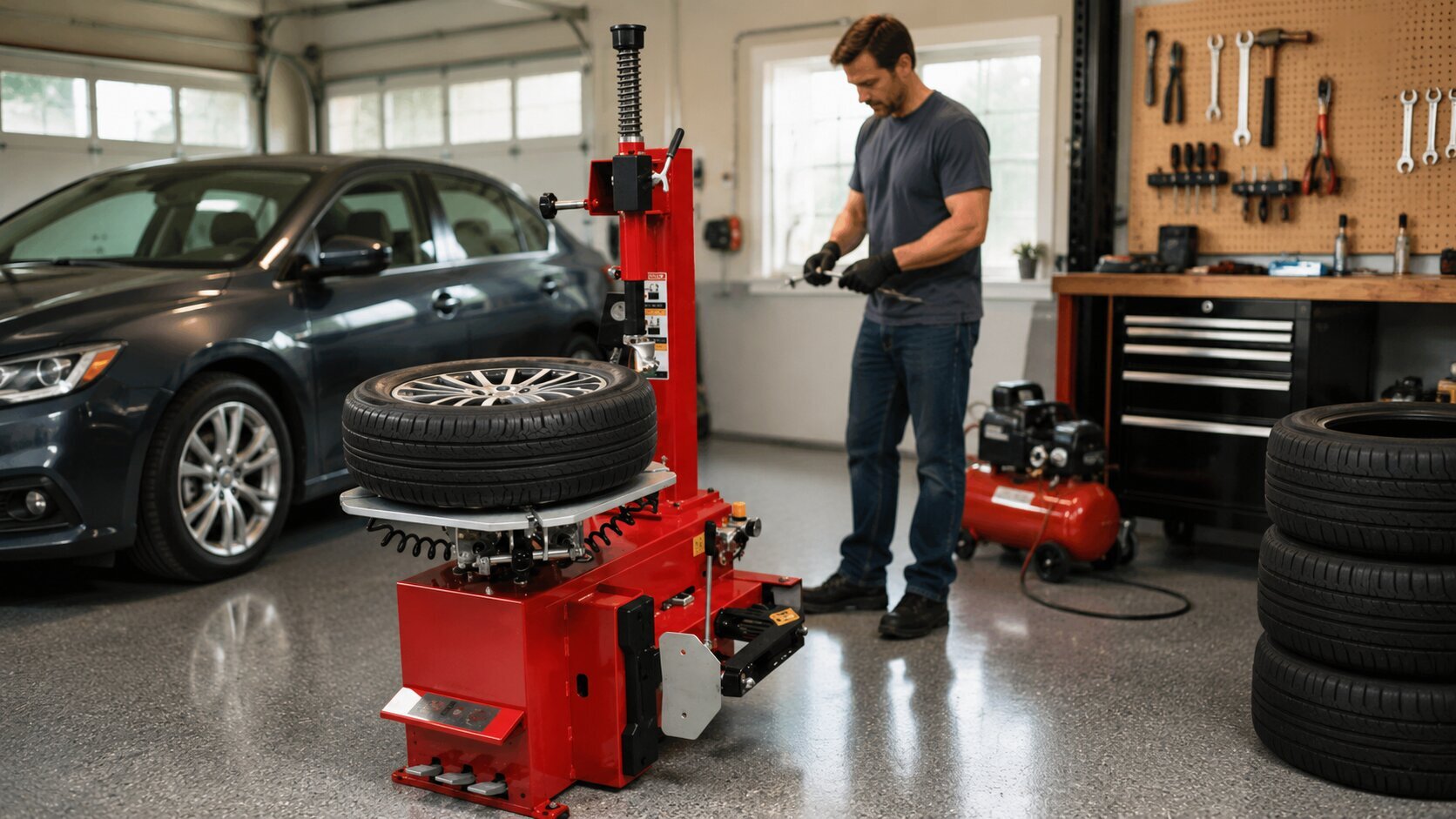
Getting tires mounted and balanced at a shop costs money every time, and if you're the kind of person who rotates their own tires, tracks their vehicles, or rides motorcycles, those trips add up quickly.
A tire changer for the home garage changes the math, especially for someone who swaps between summer and winter tires twice a year or runs multiple vehicles.
It’s fair to note that home garage tire changers aren't the same market as shop equipment.
Whether you're after a DIY tire changer for occasional use or a proper machine for a small garage that sees regular work, you're not looking for something that handles 60 cars a day.
You want something that fits the space, works for your specific vehicles, and doesn't require three-phase power or a full-time technician to operate.
Key Factors to Consider Before You Buy
Garage Space
Tire changers take up floor space and need working room around them. Manual and compact models have the smallest footprint; some bolt to a workbench or mount on a floor stand that stores against a wall.
Entry-level swing arm machines are larger and need to be positioned where you can walk a wheel around to the head. Measure the space before you fall in love with a model.
How Often You'll Use It
Frequency changes which type makes sense. Occasional use, a few sets of tires per year, suits a manual or compact machine well, since you're not burning through tire changes fast enough to care about speed. Higher frequency use, like a track car plus daily drivers, or a family with multiple vehicles, makes a step up to an entry-level automatic more worthwhile.
What You're Changing Tires On
Passenger cars and light trucks are the most common use cases, and most entry-level swing arm machines handle them without issue. Motorcycles need a different tool entirely. And low-profile or run-flat tires on modern performance wheels are more demanding than conventional tires, worth factoring in if that's your situation.
Budget
Manual units are the most affordable tire changers on the market, well under $500 for most models, making them the best budget tire changer option for occasional home use. Entry-level powered swing arm machines sit in the mid-range tier, typically starting around the $1,500 to $2,000 mark and climbing from there depending on capacity and features.
Motorcycle-specific units span a similar spread from budget manual options to mid-range powered machines. Anything in the premium tier, purpose-built for heavy commercial use, is genuinely useful for demanding applications but overkill for a typical home garage setup.
Types of Tire Changers for Home Garages
Manual Tire Changers
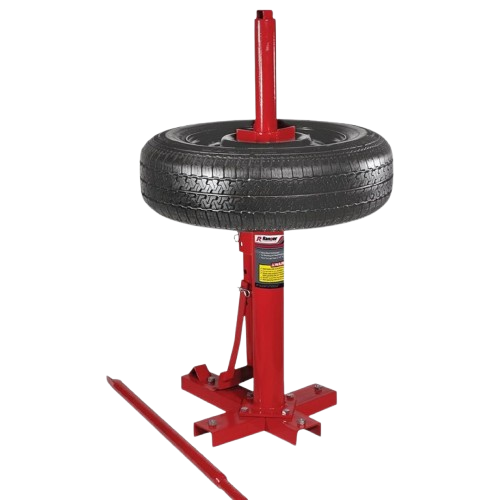
A manual tire changer uses leverage and manual force rather than a powered turntable or pneumatic bead breaker. You break the bead by hand using a bead breaker arm, then use mounting bars to work the tire on and off the rim. No electricity needed, no air compressor required, and the units are compact enough to store easily.
The Ranger RWS-3TC is the entry point for passenger car tires in this category, handling wheels from 8" to 16". The TSI CH-22 is a different animal entirely: it's designed specifically for small tires like ATV, trailer, and golf cart sizes, not passenger cars, so make sure you're buying the right tool for the right application.
The tradeoff for all manual units is effort. If you're looking for a manual tire changer for home use on standard passenger tires a few times a year, these do the job without any power requirements. Where they struggle is with modern tires with stiff sidewalls and low profiles, which take considerably more physical work to change manually than older conventional tires. Less practical if you're regularly dealing with run-flats or thick-sidewall performance tires.
Pros: lowest cost, smallest footprint, no power source needed
Cons: physically demanding, slower, less suited to modern stiff-sidewall tires
Entry-Level Automatic Tire Changers (Swing Arm)
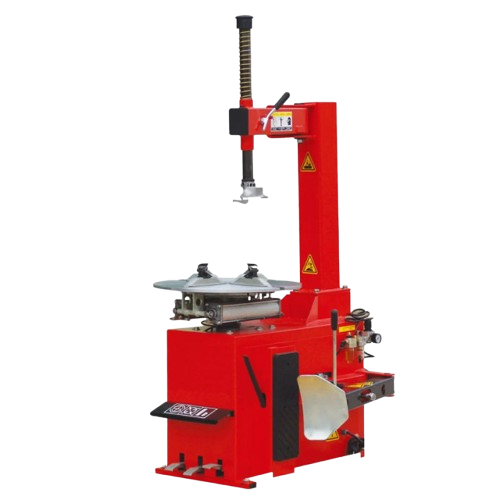
A swing arm tire changer uses a powered turntable to rotate the wheel while the head assembly works the tire on or off the rim. You clamp the wheel onto the turntable, break the bead with a pneumatic or hydraulic bead-breaker arm, and the machine handles most of the rotation while you guide the tire over the head.
These are the most popular category for home garages that see regular use. A decent entry-level swing-arm machine handles most passenger cars and light trucks without issues, works on aluminum and steel wheels, and has enough power to deal with most standard tire-and-wheel combinations a home mechanic would actually encounter.
What to Look for When Comparing Models
Rim diameter range. This tells you the widest and smallest wheel the machine can clamp. Worth checking if you run larger truck wheels and compact car rims across different vehicles.
Bead breaker force. More important than it sounds if you plan to work with modern run-flat or stiff low-profile tires. These need considerably more force to break the bead than a standard passenger tire.
Voltage. 110V models run on standard household current with no electrical work required. 220V machines offer more consistent torque under heavy loads but need a dedicated circuit. For most home garage use cases, 110V is sufficient.
Browse JMC's full swing tire changer collection to see the complete range.
Pros: handles most passenger cars and trucks, powered turntable speeds up the job considerably, good capacity for the price
Cons: larger footprint than a manual unit, requires an air compressor (for most models), higher upfront cost
Motorcycle Tire Changers
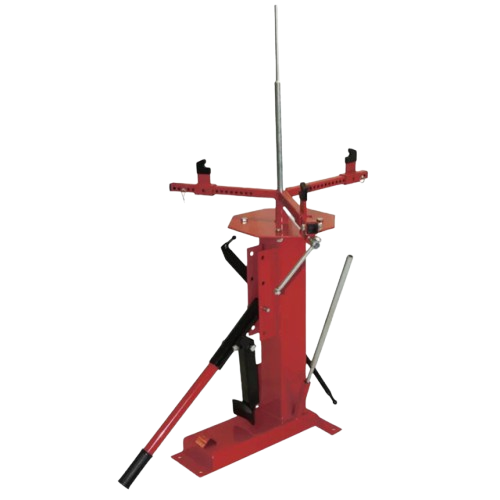
A motorcycle tire changer is a different machine from a car tire changer, and the two aren't interchangeable. Motorcycle wheels are smaller, lighter, and designed with center-mount rather than outer-flange clamping, so a car changer's jaw setup won't work. Manual motorcycle changers use a different clamp and bar system; powered versions use a swivel arm mechanism designed specifically for bike geometry.
If you're looking for the best motorcycle tire changer for home garage use, both the JMC TC-MCATVM (manual) and the JMC TC-400M-B (powered) are worth considering.
These also handle ATVs, golf carts, and small off-road equipment, so if you've got more than just motorcycles in the garage, a motorcycle-specific unit covers more ground than the name suggests.
Pros: correctly designed for motorcycle and ATV geometry, available in both manual and powered versions at reasonable home-garage price points
Cons: won't work on passenger car or truck tires, a separate investment if you also need a car changer
What About Portable Tire Changers?
If you're specifically looking for a portable tire changer for garage use that stores flat and takes up almost no floor space, the closest practical option is a quality manual changer.
True portable stand-alone units designed for roadside or field use exist, but they're not designed for the tire sizes and volumes a home garage typically deals with. For most home users, the question is really manual vs. swing arm, not portable vs. fixed.
Best Tire Changers for Home Garages in 2026
These tire changer reviews cover real machines currently in stock at JMC Equipment. See each product page for current pricing, which changes with promotions and stock.
Free shipping applies to qualifying orders over $3,000.
Manual vs. Automatic: Which Is Better for a Home Garage?
It depends on what you're changing and how often. Finding the best tire changer machine for homeowners really comes down to a simple question: manual or swing arm.
Manual is the better answer if budget is the main constraint, your garage is tight on space, you don't have an air compressor, or you're only dealing with a handful of conventional tires per year. A budget manual changer that does the job, even if slowly, is a better investment than nothing.
An entry-level swing arm machine earns its higher price if you've got multiple vehicles, run modern performance tires with stiff sidewalls, or plan to use the machine regularly enough that saving time genuinely matters. The powered turntable makes a real difference on tires that would exhaust you on a manual unit.
One factor worth knowing about power supply: most home-garage swing arm changers run on 110V, which is standard household current and doesn't require an electrician.
220V machines are more capable on demanding tires, since the higher voltage means the turntable keeps torque under load rather than stalling, but they require a dedicated circuit.
For most home garage use cases, 110V is sufficient. If you're regularly dealing with truck tires or performance rubber with very stiff sidewalls, it's worth considering whether a 220V machine belongs in the plan.
Safety and Maintenance Tips
A tire changer is mechanical equipment, and a few basics keep it working right:
- Always lubricate the tire bead before mounting or demounting. It protects the rim and makes the job much easier, especially on stiff-sidewall tires. Mounting lubricant, rim protectors, and valve stem tools are all available in JMC's tire changer accessories range - worth stocking before your first job rather than hunting for them mid-change.
- Keep the bead breaker blade and mounting head clean and free of built-up rubber residue. A dirty head causes scratches and makes it harder to seat the tire correctly.
- Check that the turntable jaws are adjusted correctly for the wheel before clamping. Incorrect jaw position is the main cause of rim damage.
- Don't exceed the machine's rated rim diameter. Forcing an oversized rim into a machine not rated for it damages both the machine and the wheel.
- Follow the manufacturer's lubrication schedule for moving parts. Most machines have specified grease points, so check your manual rather than assuming a one-size-fits-all interval.
Shop Tire Changers at JMC Equipment
JMC Equipment carries manual, swing arm, and motorcycle tire changers from brands including Ranger, Corghi, Hofmann, CEMB, and JMC's own lineup, at a range of price points from straightforward manual units up to commercial-grade machines for demanding applications. Financing is available, and free shipping applies to most orders over $3,000.
Browse the full tire changer collection or call 800-562-4791 to talk through which machine fits your garage and use case.
Frequently Asked Questions
What is the cheapest tire changer for a home garage?
The Ranger RWS-3TC manual tire changer is the most affordable entry point for standard passenger car tires, handling wheels from 8" to 16". The JMC TC-MCATVM covers motorcycles and ATVs at a similar budget price point. The TSI CH-22 is the budget option for small tires like ATV, trailer, and golf cart sizes, but it's not designed for passenger car tires, so confirm your application before buying. Check JMC's current product pages for pricing, since promotional deals shift regularly.
Are manual tire changers worth it?
For occasional use on standard tires, yes. A manual changer handles the job at a fraction of the cost of a powered machine, and the compact size and lack of power requirements are genuine advantages for a home setup. Where they struggle is with modern low-profile tires, run-flats, or any situation where you're changing multiple sets regularly, and physical effort becomes a real factor.
Can I use a professional tire changer at home?
You can, but most professional-grade machines are built for 220V three-phase power, high daily volume, and commercial shop footprints. The cost and power requirements don't make sense for a home garage unless you have specific demanding use cases. Entry-level swing arm changers are designed for exactly this overlap: professional-style operation at a scale and price point that makes sense outside a commercial shop.
Do I need an air compressor for a tire changer?
For manual units, no. For most powered swing arm and motorcycle changers, yes. The bead breaker and often the inflation system both use compressed air. A standard home compressor capable of 150 psi is sufficient for most entry-level machines. If you don't already have a compressor, factor that into your total budget.
What accessories do I need?
At a minimum: tire mounting lubricant (never use WD-40 or petroleum-based products on tire beads) and a valve stem tool. A rim protector set is worth adding if you're working with aluminum or chrome wheels, you don't want scratched.
 CALL US NOW
