
Wheel Alignment vs. Wheel Balancing: What's the Difference?
Posted by Johnny Keys on 19th May 2021
Your car starts shaking at 65 mph, or maybe it keeps drifting toward the shoulder, no matter how straight you hold the wheel. Either way, you've probably heard two words tossed around as the fix: alignment and balancing.
Many car owners assume they're the same service. They're not. One deals with weight. The other deals with angles. Mixing them up means paying for the wrong fix, or worse, walking away from the shop with the actual problem still sitting there.
Here's what each service actually does, how to tell which one your car needs, and what happens when you skip either one for too long.
What Is Wheel Balancing?
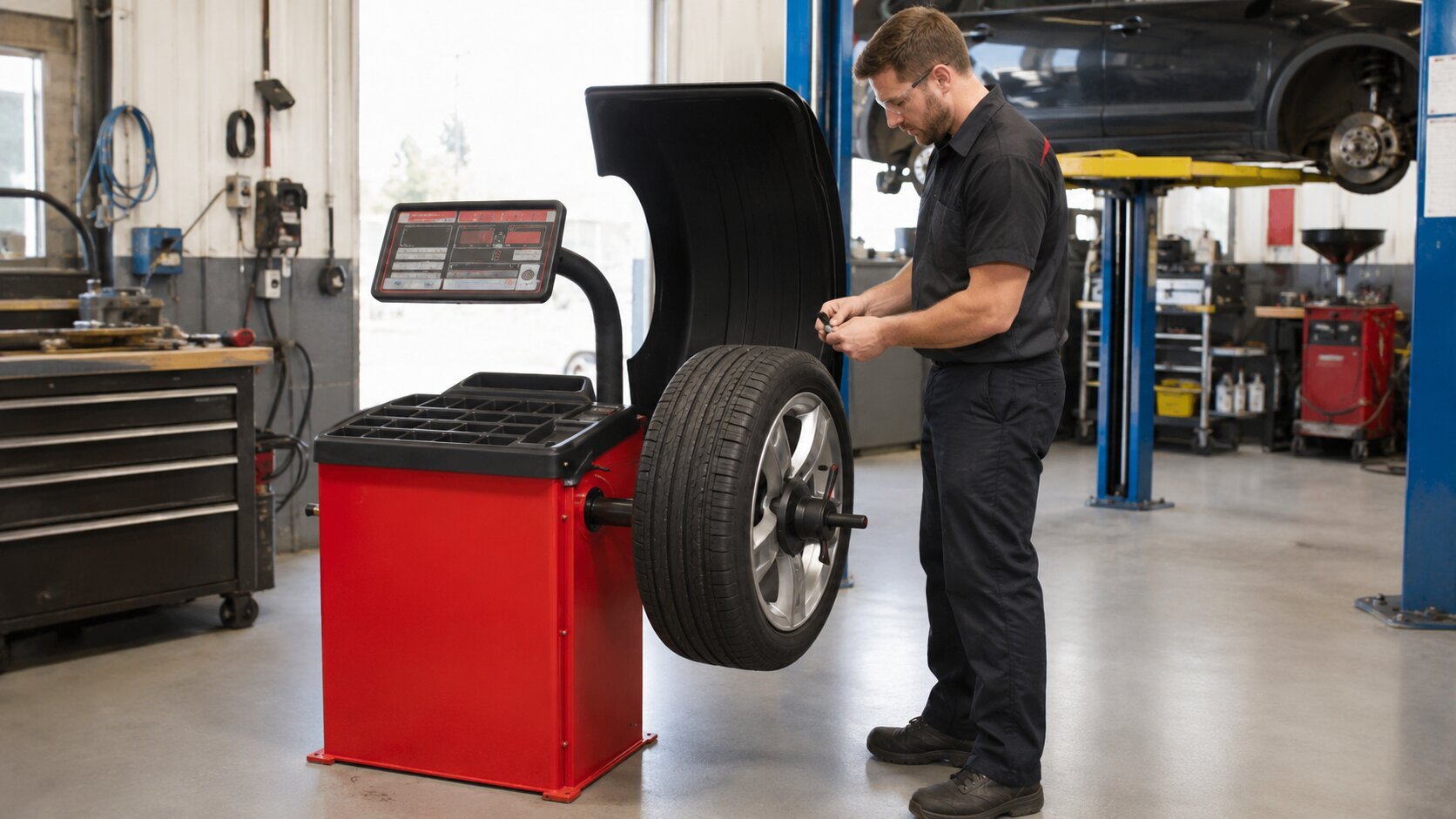
Every tire and wheel assembly has tiny weight variations built in. No tire comes off the line perfectly even, and small differences in rubber thickness or rim material make one side heavier than another. Spin that assembly at highway speed, and the heavy spot creates a wobble. That's the vibration you feel in the steering wheel, the seat, or the floor.
Wheel balancing corrects this. A technician mounts the wheel on a balancing machine, spins it, and the machine pinpoints exactly where the imbalance sits. Small weights get clipped or stuck onto the rim at that spot to even things out. No suspension components involved, no angle adjustments. Just weight, corrected.
What Throws a Wheel Out of Balance
Imbalance doesn't always start at the factory. Curbs, potholes, and general wear redistribute weight around a tire over time. A wheel weight can fall off after a hard bump. A tire can develop a flat spot from sitting parked too long. Any of these throws off what was a balanced wheel when it left the shop, which is why balancing needs rechecking periodically rather than being a one-time fix.
Why It's Worth Fixing
Left unaddressed, an imbalanced wheel does more than annoy you on the highway. The constant vibration stresses suspension components, wheel bearings, and shock absorbers that weren't built to handle that kind of repetitive jolt. Over enough miles, that shows up as premature wear on parts considerably more expensive than a set of wheel weights.
Signs You Need Wheel Balancing
- Vibration in the steering wheel, usually most noticeable at highway speeds
- Shaking felt through the seat or floorboard rather than the wheel
- A humming or droning noise from the tires that gets louder over time
- Cupped or patchy wear spots across the tire tread, rather than wear concentrated on one edge
One useful diagnostic trick: where you feel the shake often tells you which end needs attention. Vibration through the steering wheel usually points to the front tires. Vibration in the seat or floor often points to the rear.
What Is Wheel Alignment?
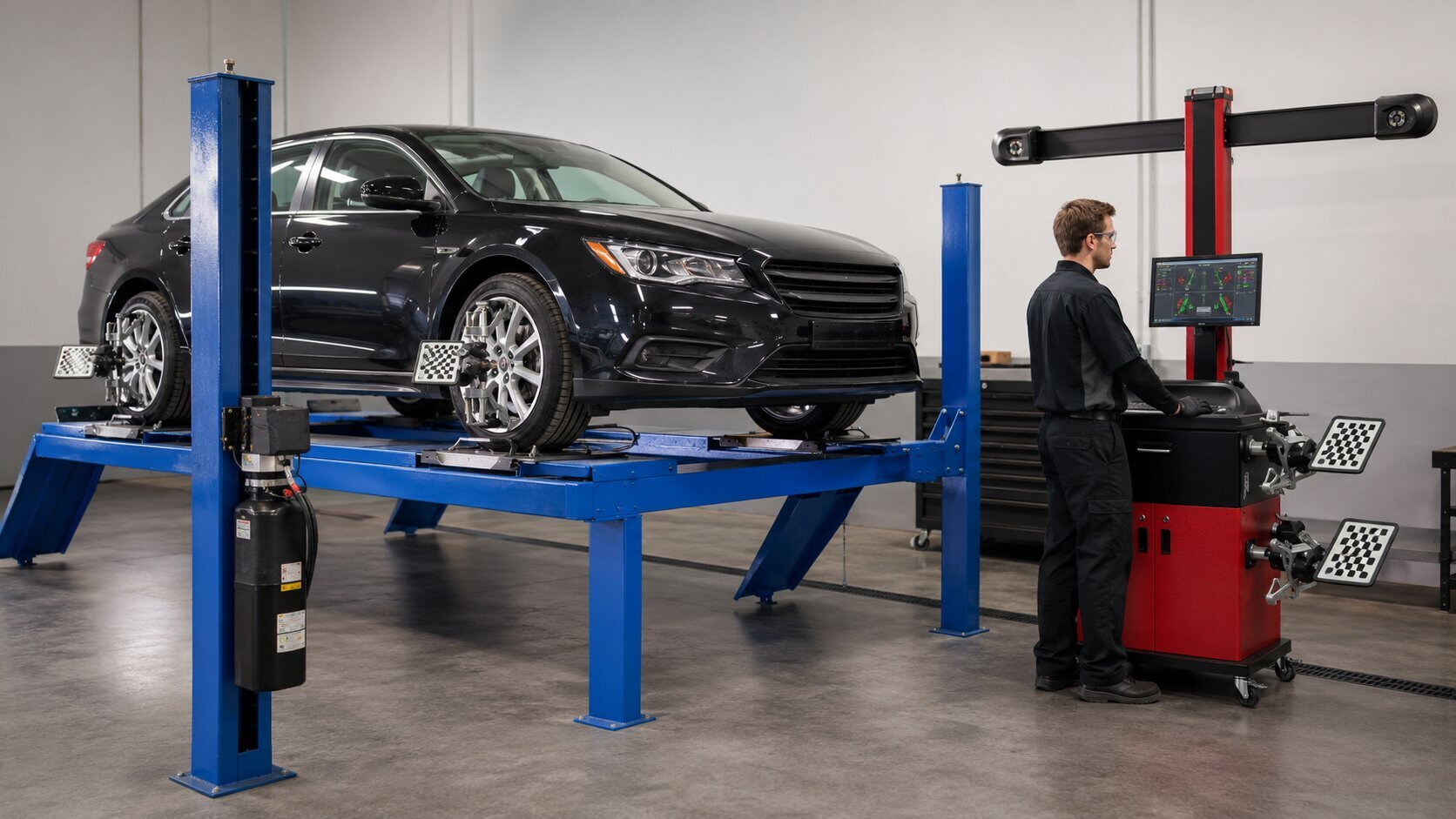
Wheel alignment has almost nothing to do with the wheels themselves, despite the name. It's really about the suspension, specifically the angles at which your wheels meet the road.
Three angles matter: camber (the inward or outward tilt of the tire, viewed from the front), caster (the angle that affects steering stability and how the wheel returns to center after a turn), and toe (whether the tires point slightly inward or outward relative to each other).
When those angles drift out of factory spec, usually from a curb strike, a deep pothole, or just years of daily driving, the car stops tracking straight. A technician corrects this on an alignment rack, measuring all three angles with a computerized or laser system, then adjusting the suspension until everything sits back within spec.
How It Sneaks Up on You
A misalignment rarely causes one dramatic failure. It nags instead. The car drifts a little more each week, the wear gets slightly more uneven, and most drivers chalk it up to the road or the wind until it's hard to ignore. By the time the steering wheel sits visibly crooked, the tires have usually already taken the brunt of the damage, sometimes losing thousands of miles of usable tread to wear that alignment would have prevented.
When Worn Parts Are the Real Culprit
Worn suspension parts can throw off alignment even without a specific impact. Tie rods, ball joints, and control arm bushings loosen with age, and once they're worn enough, the alignment won't hold even after it's corrected. A shop may flag worn components as part of the alignment process rather than something separate, and it's worth knowing that going in.
Signs You Need Wheel Alignment
- The car pulls or drifts to one side even with the steering wheel held straight
- The steering wheel sits crooked when driving on a straight, flat road
- Tires wearing unevenly, especially more on one edge than the other
- The car feels like it's fighting you slightly in normal driving, requiring constant small corrections
Key Differences Between Alignment and Balancing
The simplest way to separate the two: balancing is about weight, alignment is about direction. A wheel can be perfectly balanced and still misaligned, and a wheel can be perfectly aligned and still wildly out of balance. They're independent problems that happen to produce overlapping symptoms, which is exactly why people confuse them.
Do You Need Both?
Sometimes a car only needs one service. Sometimes it needs both, and sorting out which is happening can be tricky, since an unbalanced wheel can occasionally feel similar enough to a pull that it gets mistaken for an alignment issue.
When Balancing Alone Is Enough
If vibration is the main complaint and the car otherwise tracks straight with no pulling, balancing alone usually resolves it.
When Alignment Is Necessary
If the car pulls to one side, the steering wheel sits off-center, or wear is concentrated on one edge of the tire, that's alignment territory. Balancing won't touch any of that.
When You Need Both
When vibration and pulling show up together, the general rule shops follow is to balance first, then align. An imbalanced wheel can introduce enough vibration and inconsistent feedback through the steering that it muddies the diagnosis for alignment work. Clearing the balance issue first gives the alignment technician a cleaner baseline to work from.
New tire installations are a natural point to handle both. Balancing happens automatically as part of mounting new tires on a tire changer, and it's a smart time to have the alignment checked too, since uneven wear from a misalignment starts chewing through that new set immediately if it isn't caught.
Why the Difference Matters for Shop Owners
For drivers, mixing up these two services just means a confusing trip to the shop. For the shop itself, the distinction matters in a more practical way.
Misdiagnosis Costs Bay Time
A tech who treats a vibration complaint as an alignment issue, or a pulling complaint as a balance issue, sends the customer home without actually fixing anything. That customer comes back annoyed, sometimes blaming the shop rather than the diagnosis. Separating the two quickly, using the symptom patterns above, cuts down on wasted bay time and repeat visits.
Equipment Affects What You Catch
A basic spin balancer catches straightforward weight imbalance, but it won't catch radial force variation, the internal tire stiffness inconsistency that a road force balancer is built to detect. If customers keep returning with the same vibration complaint after a standard balance, that's usually a sign the equipment isn't catching the full picture, not that the work was done poorly.
The same logic applies to alignment racks. Older systems relying on manual measurement take longer and leave more room for small errors than a modern laser or camera-based rack, and that difference adds up across a busy week of bookings.
The right shop equipment across the bay, not just balancers and racks, tends to show up directly in how many cars a shop can turn around in a day.
Customer Education Reduces Disputes
A lot of the confusion this article addresses shows up at the service counter too. Customers who don't understand why they're being charged for two separate services are more likely to push back on an invoice or assume they're being upsold. Shops that take the time to explain the distinction clearly, even briefly, tend to see fewer disputes and more repeat business from customers who feel like they understood what they paid for.
Keep Your Shop Equipped for Both
Whether your shop handles high-volume tire work or full-service alignment jobs, having the right equipment for both services means fewer comebacks and faster turnaround. JMC Equipment carries wheel balancers from trusted brands such as Hofmann, Corghi, and CEMB, along with alignment lifts and racks designed for accuracy and durability.
Browse wheel balancers or alignment lifts at JMC Equipment, or call 800-562-4791 to talk through what fits your shop.
Frequently Asked Questions
How often should I get my wheels balanced?
Most shops recommend balancing whenever tires are rotated, typically every 5,000 to 7,500 miles, and any time new tires go on the car. If you notice vibration before then, there's no harm in having it checked sooner.
How often should I get an alignment?
Once a year is a reasonable baseline for most drivers, or immediately after hitting a significant pothole, curb, or any impact that could have knocked the suspension out of spec. It's also worth checking alignment whenever a new set of tires goes on, since misalignment will wear that fresh tread unevenly from day one.
Does balancing fix pulling to one side?
No. Pulling is an alignment symptom, caused by suspension angles being out of spec, not a weight distribution issue. Balancing addresses vibration, not directional drift. If the car pulls, an alignment is what corrects it.
Can unbalanced wheels cause alignment issues?
Not directly. Balancing and alignment work on different systems, weight versus angle, so an imbalance won't actually knock your alignment out of spec. What it can do is make diagnosis harder, since the vibration from an unbalanced wheel sometimes gets mistaken for a steering or suspension problem that points toward alignment when balancing was the real fix needed.
Can I do either of these myself?
Not accurately. Both services depend on precision equipment, a wheel balancer for one, a computerized or laser alignment rack for the other, that isn't practical for a home garage. Attempting either without the right tools usually means guessing at a fix that needs to be exact.
 CALL US NOW
